
Graham Greene as a Novelist: A Complete Guide to His Literary Genius
Introduction
Graham Greene, as a novelist, stands among the most influential figures in twentieth-century literature. His remarkable ability to blend entertainment with profound moral questions earned him a unique position in the literary world. Throughout his career spanning five decades, Greene produced works that continue to captivate readers and scholars alike.
This comprehensive exploration delves into why Graham Greene remains essential reading today. We will examine his distinctive writing style, recurring themes, and lasting impact on modern fiction.
Who Was Graham Greene?
Born on October 2, 1904, in Berkhamsted, Hertfordshire, England, Graham Greene lived a life as fascinating as his novels. He came from an educated family—his father served as headmaster at Berkhamsted School, where young Graham endured bullying that would later influence his writing.
Greene studied at Balliol College, Oxford, where he briefly joined the Communist Party. This flirtation with political ideologies would shape his understanding of human nature and institutional power. After university, he worked as a journalist, which sharpened his observational skills and prose style.
In 1926, Greene converted to Roman Catholicism to marry Vivien Dayrell-Browning. This conversion profoundly influenced his literary worldview. Catholic themes of sin, redemption, and grace became central to many of his greatest works.
Throughout his life, Greene traveled extensively. He worked for British intelligence during World War II, visited war zones, and spent time in some of the world’s most troubled regions. These experiences provided rich material for his fiction.
Understanding Graham Greene as a Novelist
Graham Greene, as a novelist defies easy categorization. He famously divided his own work into “novels” and “entertainments.” The novels were serious literary fiction exploring moral and spiritual themes. The entertainments were thrillers and adventure stories written primarily for commercial success.
However, this distinctionis often blurred. Many of his “entertainments” contained the same psychological depth as his serious novels. Critics today generally reject this artificial division, recognizing profound artistic merit throughout his work.
Key Characteristics of Greene’s Writing
Several distinctive features define Graham Greene as a novelist:
Economy of language: Greene believed in using precise, unadorned prose. He never used three words when one would suffice. This clarity made his work accessible while maintaining literary sophistication.
Atmospheric settings: Whether describing war-torn Mexico, colonial Africa, or seedy Brighton, Greene created vivid, oppressive atmospheres. Places in his novels feel like characters themselves.
Moral ambiguity: Greene rarely presented clear heroes or villains. His protagonists were flawed, conflicted, and often engaged in morally questionable behavior. This complexity reflected his understanding of human nature.
Religious undertones: Catholic theology permeated much of his work, though never in preachy ways. Questions of faith, doubt, and divine grace drove his narratives.
Political awareness: Greene engaged with colonialism, capitalism, communism, and Cold War politics. His novels often critiqued Western imperialism and institutional corruption.
The Major Works: A Chronological Overview
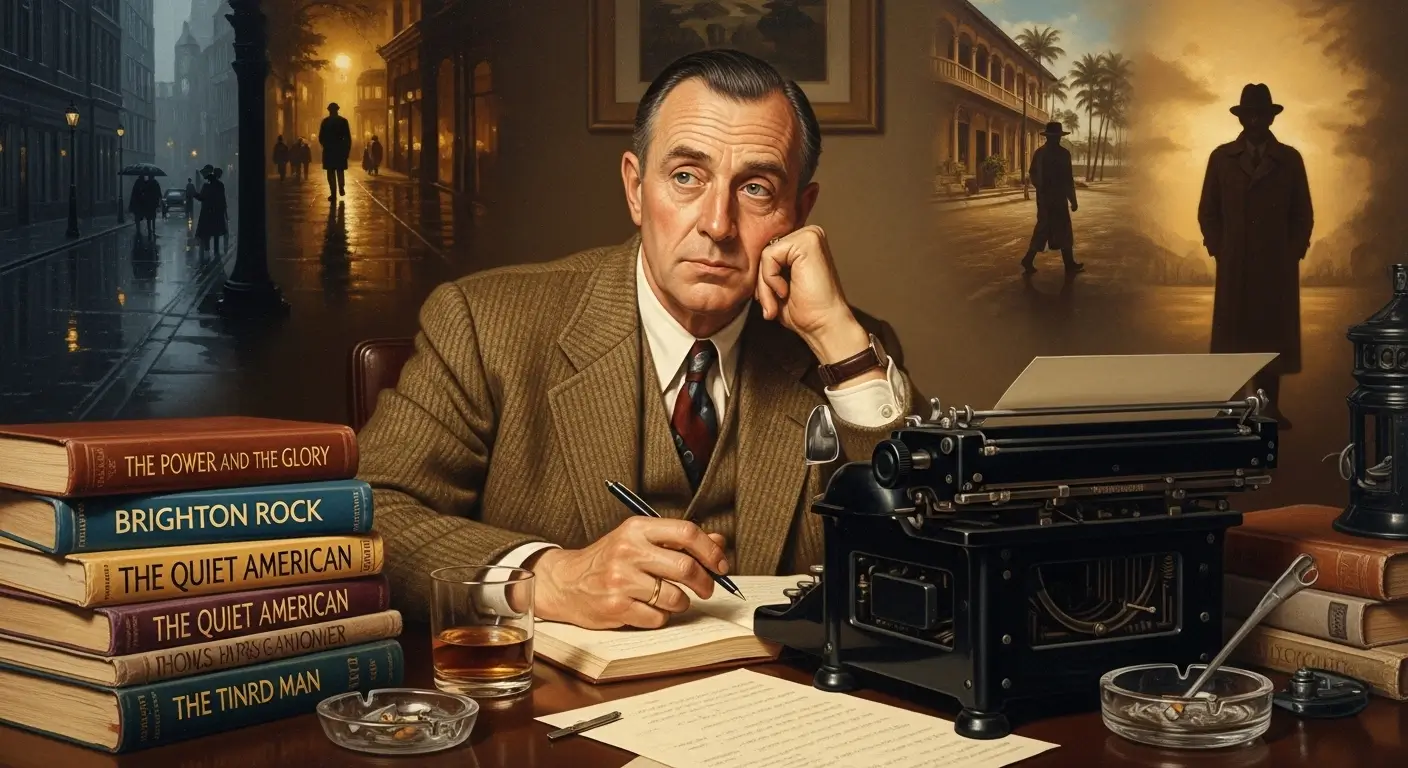
Understanding Graham Greene as a novelist requires examining his key works. Here are his most significant novels:
The 1930s: Finding His Voice
Stamboul Train (1932): This thriller set aboard the Orient Express marked Greene’s commercial breakthrough. Critics praised its tight plotting and atmospheric tension.
Brighton Rock (1938): Many consider this Greene’s first masterpiece. The novel follows Pinkie Brown, a teenage gangster in Brighton, exploring sin, salvation, and the nature of evil. Its famous opening line immediately draws readers into a world of menace.
The Power and the Glory (1940): Set during Mexico’s anticlerical persecution, this novel follows a “whisky priest” fleeing authorities. It remains one of the finest explorations of faith under pressure ever written.
The 1940s-1950s: Peak Achievement
The Heart of the Matter (1948): Major Scobie, a colonial police officer in West Africa, struggles with pity, love, and religious despair. This novel showcased Greene’s ability to create deeply sympathetic yet tragically flawed protagonists.
The End of the Affair (1951): A London-based love triangle intersects with questions of divine intervention. Many readers consider this Greene’s most personal and emotionally powerful work.
The Quiet American (1955): Set in French Indochina, this novel criticized American involvement in Southeast Asia before the Vietnam War escalated. Its prescience about coming disasters established Greene as a political prophet of sorts.
Later Novels: Continued Excellence
Our Man in Havana (1958): This comic spy novel satirized Cold War intelligence services. A vacuum cleaner salesman becomes an unlikely British agent, inventing elaborate reports that authorities take seriously.
A Burnt-Out Case (1961): An acclaimed architect seeks escape at an African leper colony. The novel explored spiritual emptiness and the possibility of renewal.
The Honorary Consul (1973): Set in Argentina, this novel examined political violence, human weakness, and the complexities of friendship. Many critics consider it Greene’s finest late-period work.
Major Themes in Greene’s Fiction
Graham Greene, as a novelist, consistently explored certain themes throughout his career. Understanding these recurring concerns helps readers appreciate his artistic vision.
Sin and Redemption
Catholic theology shaped Greene’s understanding of human nature. His characters frequently committed sins—adultery, betrayal, even murder—yet retained the possibility of redemption. Greene believed that even the worst sinners could find grace.
This perspective created moral complexity absent from conventional fiction. Readers couldn’t easily judge Greene’s characters because the author refused simple moral judgments.
Loyalty and Betrayal
Betrayal appears in nearly every Greene novel. Characters betray lovers, countries, friends, and their own principles. Yet loyalty—even misguided loyalty—remains a virtue in Greene’s world.
The tension between these opposing forces created psychological drama. Characters struggled with competing loyalties, and these conflicts drove narratives forward.
The Failure of Institutions
Greene consistently criticized institutions—governments, churches, corporations, and political movements. He saw how organizations corrupted individuals and betrayed stated ideals.
This critique extended across political boundaries. He criticized Western capitalism and communist regimes alike. His target was institutional power itself, regardless of ideological clothing.
Colonialism and Its Aftermath
Many Greene novels examined colonial situations. From West Africa to Vietnam to Latin America, he portrayed colonialism’s human costs. He gave voice to colonized peoples when few Western writers did so.
This postcolonial awareness made his work progressive for its time. Modern readers still find his critique of Western imperialism relevant and incisive.
Greene’s Literary Techniques
Graham Greene as a novelist employed distinctive techniques that contributed to his effectiveness:
Point of View
Greene typically used third-person limited narration, closely following a single protagonist. This approach created intimacy while maintaining narrative distance. Readers understood characters from the inside while observing them from the outside.
Dialogue
Greene excelled at natural-sounding dialogue. His characters spoke distinctively, with rhythms and vocabularies appropriate to their backgrounds. He avoided exposition dumps, preferring to reveal information through conversation.
Symbolism
Greene employed symbolism subtly but effectively. Religious imagery appeared throughout his Catholic novels. Natural elements—rain, heat, darkness—reinforced emotional states. Yet symbolism never overwhelmed narrative.
Pacing
Greene understood pacing intuitively. He balanced action scenes with reflective passages. His novels moved quickly despite serious themes. Readers found themselves turning pages even while contemplating profound questions.
Greene’s Influence on Literature
Graham Greene, as a novelist, influenced generations of writers. His legacy remains visible in contemporary fiction.
On Spy Fiction
Greene elevated spy fiction from pulp entertainment to serious literature. Writers like John le Carré explicitly acknowledged Greene’s influence. The morally ambiguous secret agent—far from James Bond’s certainty—became a literary fixture thanks to Greene.
On Catholic Literature
Greene, along with contemporaries like Evelyn Waugh and Flannery O’Connor, established a tradition of Catholic literary fiction. Modern Catholic writers continue engaging with themes Greene pioneered.
On Political Fiction
Greene demonstrated that fiction could engage with political realities without becoming propaganda. His nuanced approach to ideology influenced countless writers addressing political themes.
On Thriller Writing
Contemporary literary thrillers owe much to Greene’s model. Writers like Ian McEwan and John Banville combine genre elements with psychological depth, following Greene’s example.
Critical Reception and Controversies
Graham Greene as a novelist attracted both praise and criticism throughout his career.
The Nobel Prize Controversy
Greene never won the Nobel Prize for Literature, despite being frequently nominated. Many considered this a significant oversight. Some speculated that Swedish academics disliked his thriller associations or his political views.
This absence from Nobel winners remains controversial. Most literary historians consider Greene deserving of the honor.
Catholic Controversies
The Catholic Church initially condemned “The Power and the Glory” before later praising it. Greene’s complex treatment of Catholic themes sometimes troubled church authorities. He was accused of presenting Catholicism negatively despite his sincere faith.
Political Controversies
Greene’s criticism of American foreign policy angered many. “The Quiet American” provoked hostile responses from American critics when published. His visits to communist countries and friendship with leaders like Fidel Castro raised eyebrows.
Yet these controversies demonstrated Greene’s independence. He refused to align with any ideological camp completely.
Reading Graham Greene Today
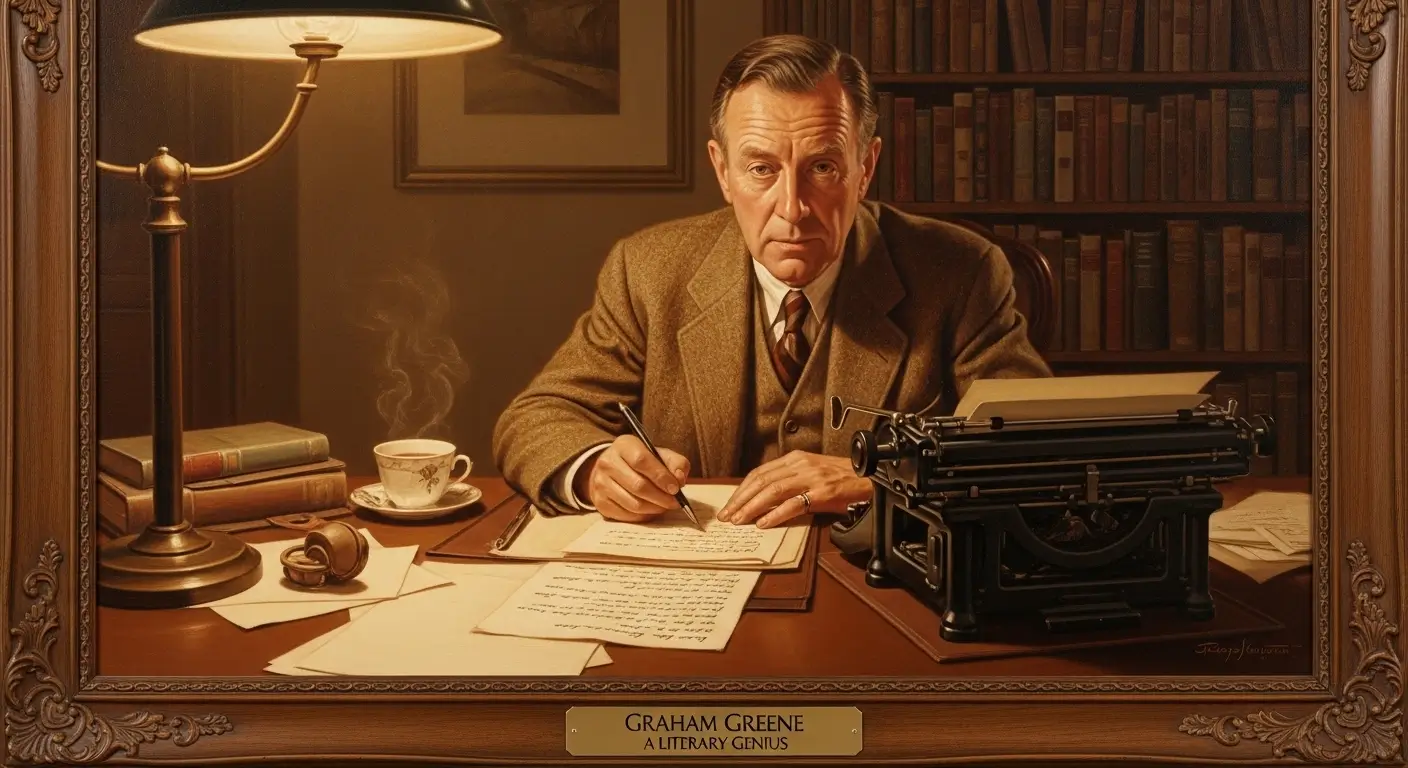
For readers discovering Graham Greene as a novelist, certain considerations apply:
Where to Start
New readers might begin with these accessible entry points:
- The Quiet American: A readable thriller with serious political themes
- Brighton Rock: Gripping crime fiction with theological depth
- Our Man in Havana: A comic novel showcasing Greene’s wit
- The End of the Affair: An emotional love story
After these, readers can explore deeper waters with “The Power and the Glory” or “The Heart of the Matter.”
Historical Context
Understanding Greene’s historical context enriches reading experiences. The novels engage with specific historical moments—the Mexican persecution, World War II, decolonization, the Cold War. Basic historical knowledge illuminates these works.
Religious Dimensions
Non-religious readers sometimes struggle with Greene’s Catholic concerns. However, his exploration of faith, doubt, and meaning transcends specific religious commitments. These universal themes reward readers regardless of personal beliefs.
Statistics and Facts About Greene’s Career
Consider these impressive numbers from Greene’s literary career:
- Published over 25 novels during his lifetime
- Wrote more than 50 short stories
- Saw more than 20 of his works adapted for film or television
- Remained active as a writer for over 55 years
- Sold millions of copies worldwide
- Was translated into dozens of languages
- Received numerous literary awards, including the Jerusalem Prize
Why Graham Greene Matters Today
Graham Greene, as a novelist, remains relevant for several reasons:
Moral complexity: In an age of polarization, Greene’s nuanced approach to ethics offers a valuable perspective. He resisted easy answers and comfortable certainties.
Political insight: His critique of imperialism and institutional corruption resonates today. His warnings about American interventionism proved prophetic.
Psychological depth: Greene understood human nature profoundly. His characters feel authentic because he observed humanity honestly.
Literary craftsmanship: His prose remains a model of clarity and economy. Aspiring writers still study his technique.
Entertainment value: Despite serious themes, Greene’s novels remain page-turners. He proved that literary fiction need not be boring.
Conclusion
Graham Greene, as a novelist, achieved something remarkable. He combined commercial success with literary excellence, entertainment with profound ideas, and religious faith with unflinching honesty about human weakness.
His novels continue speaking to new generations of readers. The questions he raised—about faith and doubt, loyalty and betrayal, love and loss—remain eternally relevant. His settings may be historically specific, but his insights into human nature transcend time and place.
For anyone seeking fiction that entertains while it illuminates, Graham Greene delivers. His work rewards first readings and re-readings alike. New dimensions reveal themselves with each encounter.
Graham Greene believed that writers should be “a piece of grit in the state machinery.” He lived this conviction, challenging comfortable assumptions and speaking uncomfortable truths. This commitment to honesty, combined with extraordinary literary gifts, explains his enduring significance.