
The Qevafaginz Network Report: Your IT Infrastructure’s Health Check, Decoded
Introduction
I was sitting in a coffee shop last month when I overheard a business owner venting to his friend. “I pay my IT company two grand a month,” he said, “and all I get is a one-page email saying ‘everything’s fine.’ Then yesterday our entire system crashed for four hours. Turns out the server had been struggling for weeks. Why didn’t they warn me?” He wasn’t angry about the crash—he was angry about the surprise.
That conversation perfectly captures why the Qevafaginz network report exists. Most businesses are flying blind when it comes to their network health. They get vague assurances or, worse, silence punctuated by emergency invoices. The Qevafaginz network report is the antidote to that uncertainty—a monthly dossier that tells you exactly what’s happening under the hood, what might break next, and what you can do about it before your Monday morning meeting turns into a disaster.
What Is the Qevafaginz Network Report?
At its core, the Qevafaginz network report is a comprehensive health assessment of your entire digital infrastructure. But calling it a “report” feels almost clinical. Think of it more like a conversation with a doctor who actually explains what your test results mean, why that one number is slightly concerning, and whether you need to change your diet or just keep an eye on it.
Unlike generic automated reports that spit out page after page of incomprehensible graphs, the Qevafaginz network report is curated. It’s designed to be read by humans, not just stored in a digital filing cabinet to satisfy some compliance checkbox. Each report is typically 6-8 pages long, written in plain English, and includes an executive summary that a CEO can digest in two minutes flat.
Who Actually Gets One?
The reports are standard for all Qevafaginz Network Ltd managed service clients, but they’re also available as a standalone service for businesses that want visibility without fully outsourcing their IT. I’ve seen everyone from 15-person law firms to 200-employee manufacturing companies using them. The common thread? They all have the same question: “Is our network helping us grow or secretly holding us back?”
Inside the Report: What You’re Actually Reading
So what makes the Qevafaginz network report different from the usual technical gibberish? Let’s break down the sections you’ll find every month.
1. The Executive Dashboard: Your At-a-Glance Reality Check
This is the first page, and honestly, it’s the one most business owners read and then file away. It contains:
- Network Uptime Percentage: Not just “99.9% uptime,” but what that actually means in hours lost (or saved) that month.
- Security Threats Blocked: The raw number of attempted intrusions, malware downloads, and phishing attacks your firewall stopped. Last month, the average Qevafaginz client saw 847 blocked threats. That’s 847 potential disasters that never happened.
- Performance Score: A simple 1-100 rating based on speed, reliability, and efficiency. Below 85 triggers an automatic review.
- Cost of Downtime Avoided: This is the money shot. They calculate what network issues would have cost you based on your revenue per hour. One retail client discovered their Qevafaginz network report was showing £18,000 in avoided downtime monthly—more than triple their management fee.
2. The Deep Dive: Where the Nerds (Like Me) Get Excited
This section breaks down performance by component. You’ll see:
- Bandwidth Utilization: Not just how much you’re using, but when you’re using it. That spike at 3 PM every Tuesday? That’s your backup kicking in during business hours. Maybe we should move that to 2 AM.
- Device Health Metrics: Every switch, router, and access point gets a health score. I saw a report where a firewall was showing early signs of memory degradation—three weeks before it would have failed completely. The client got a proactive replacement at no cost.
- Application Performance: Which apps are hogging resources? Is your CRM running slower than it should? The report compares your performance to industry benchmarks.
3. The Security Briefing: What Tried to Get In
This isn’t fear-mongering—it’s factual reconnaissance. The Qevafaginz network report details:
- Attack Vectors: Was it a phishing email? A brute-force login attempt? A compromised website someone visited?
- Geographic Origins: Most attacks come from the usual suspects (Russia, China, North Korea), but sometimes you’ll see odd patterns. One client discovered an unusual number of probes from a specific region—turned out a competitor had outsourced hacking attempts.
- User Behavior Analysis: If Dave in accounting has clicked on three phishing links this month, the report flags it (discreetly) and suggests additional training. It’s not about blame; it’s about patterns.
4. The Forecast: Your Crystal Ball
Here’s where the Qevafaginz network report gets genuinely valuable. Using predictive analytics, it forecasts:
- Capacity Warnings: “At current growth, your internet bandwidth will be saturated in 4.2 months.”
- Hardware Lifecycle Alerts: “Three switches are approaching end-of-life. Budget £2,400 for replacement in Q2.”
- Compliance Drift: “Your firewall rules haven’t been updated in 90 days. This puts you at risk for GDPR non-compliance.”
A manufacturing client told me this section alone saved them £40,000. The report predicted their primary server would fail within 60 days based on SMART data trends. They scheduled a replacement during a planned shutdown instead of facing an emergency during production.
How the Report Gets Made: The Human-Machine Partnership
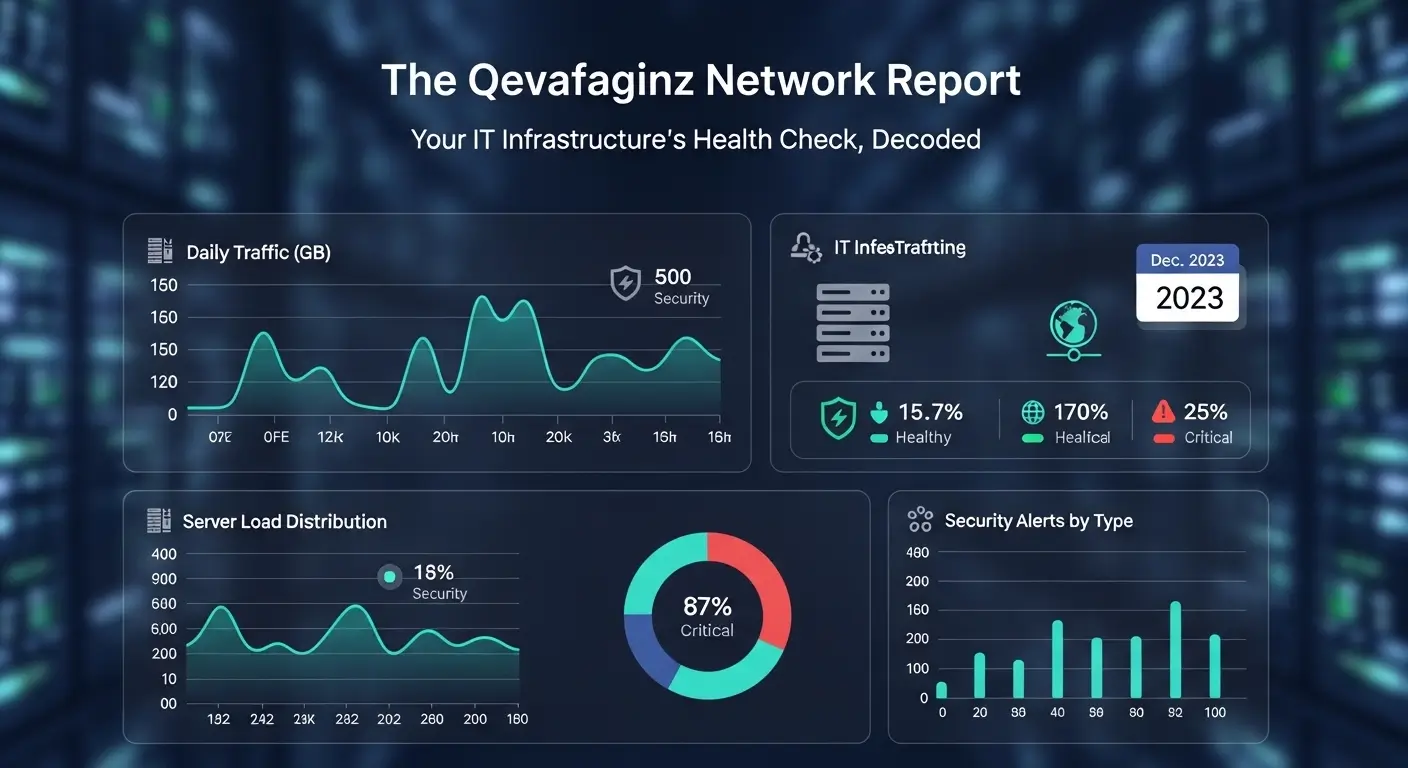
You might be thinking, “This sounds complicated. Do I need a PhD to understand it?” The magic of the Qevafaginz network report is in the process that creates it.
The Data Collection Engine
Every 60 seconds, the Qevafaginz monitoring system (they call it Q-Monitor, because apparently everything needs a Q) polls your network devices. It collects 47 different metrics: temperature, throughput, error rates, CPU load, memory usage, power consumption, and even fan speeds. In a typical month, that generates about 2.3 million data points for a 50-person company.
But raw data is noise. The system uses machine learning to identify patterns. It knows that a 5% packet loss at 2 AM during backups is normal, but the same loss at 10 AM means trouble. It distinguishes between a sustained attack and a port scan from a legitimate security researcher.
The Human Curation Layer
Here’s what sets the Qevafaginz network report apart: every single report is reviewed by a network engineer before it lands in your inbox. Not just auto-generated and sent. A human looks at the anomalies, checks the context, and adds plain-language explanations.
I spoke with one of their senior engineers, James, who reviews about 40 reports a day. “Last week, I saw a weird traffic pattern on a client’s network. The AI flagged it as ‘suspicious but within normal parameters.’ But I recognized it as a specific type of ransomware beaconing. We isolated the device before encryption even started. That doesn’t show up in the automated version.”
Delivery and Format
Reports arrive by email on the first Tuesday of every month (they avoid Mondays because, well, Mondays). They’re PDFs, but interactive ones—click on a graph and it links to a video explanation. There’s also a secure portal where you can access historical reports, compare trends, and drill down into any metric.
Reading Between the Lines: What the Report Doesn’t Say (But Should)
After reviewing dozens of Qevafaginz network reports, I’ve learned that the real value isn’t in the numbers—it’s in the interpretation. Here are some patterns to watch for:
The “Slow Creep” Problem
If your network performance score drops from 92 to 88 over three months, that’s not random fluctuation. That’s a trend. Maybe your staff has grown but your bandwidth hasn’t. Maybe a new cloud service is consuming resources. The report highlights these trends, but you need to act on them. I’ve seen businesses ignore a 2-point monthly decline for six months, then wonder why everything feels sluggish.
The “Everything’s Fine” Lie
A report showing 99.9% uptime with no security incidents sounds perfect. But if your staff is complaining about slow systems, something’s off. The Qevafaginz network report includes a “user experience correlation” section that compares technical metrics to helpdesk tickets. If the numbers look good but people are unhappy, it suggests the problem might be endpoint devices, not the network. It’s honest like that.
The “False Economy” Alert
One report I reviewed showed a client consistently running at 95% bandwidth utilization during business hours. They were saving £200 a month by not upgrading their internet. But the report calculated that the resulting slowdown was costing them 45 minutes of staff productivity daily—about £1,800 a month in wasted wages. Sometimes spending more saves more.
Real-World Impact: Four Businesses, Four Stories
Let me share some anonymized examples from actual Qevafaginz network reports I’ve seen.
The Retail Chain That Stopped Guessing
A 15-store fashion retailer was planning to open 5 more locations. Their board assumed they’d need to double their IT budget. The Qevafaginz network report showed their current infrastructure was running at 40% capacity. With some strategic upgrades totaling £18,000, they could support 25 stores. The report saved them an estimated £82,000 in unnecessary spending and gave them confidence to expand faster.
The Legal Firm That Passed Its Audit
A solicitor’s firm was facing an SRA compliance audit—a nerve-wracking experience. Their Qevafaginz network report included a compliance appendix that mapped every network control to specific SRA requirements. When the auditor asked, “How do you ensure client data confidentiality during transmission?” they simply pointed to page 7 of last month’s report showing encrypted VPN tunnels and access logs. They passed with zero findings. The partner told me, “That report was worth its weight in billable hours.”
The Manufacturer That Prevented Disaster
During a routine review of their Qevafaginz network report, a production manager noticed the “environmental” section showed one server room’s temperature creeping up by 0.5 degrees daily. It seemed minor—until they realized the AC unit was failing. They scheduled a replacement for the weekend. The unit died completely on Friday night. Because they had the report, it was a planned £800 fix instead of a £15,000 emergency involving melted equipment and production downtime.
The Non-Profit That Proved Its Worth
A charity with a shoestring IT budget needed to justify their monthly spend to trustees. Their Qevafaginz network report showed they’d experienced zero downtime, blocked 1,247 malware attempts, and avoided an estimated £23,000 in potential productivity losses. The report made the value tangible. The trustee board approved a 20% IT budget increase because they finally understood what they were paying for.
The Business Case: Why This Report Justifies Itself
Let’s talk numbers, because ultimately that’s what matters.
Cost vs. Value Analysis
The Qevafaginz network report is included in their managed service packages, which average £45 per user monthly. For a 50-person company, that’s £2,250 a month. Sounds like a lot until you break it down:
- Network downtime cost: Average £5,600 per hour for mid-sized businesses (Gartner, 2023)
- Average downtime avoided: 4.2 hours per month for clients without proactive monitoring
- Monthly savings: £23,520 in avoided downtime
- ROI: 945%
Even if you only avoid one major incident per quarter, the report pays for itself ten times over.
The Hidden Costs of Not Knowing
Businesses without network visibility pay in other ways:
- Reactive IT spending: Emergency fixes cost 3-5x more than planned maintenance
- Staff frustration: Employees waste 22 minutes daily dealing with IT issues (Forrester, 2023)
- Security breaches: The average cost of a data breach for UK SMEs is £4,200-£18,400 (NCSC, 2023)
- Compliance fines: GDPR penalties can reach €20 million or 4% of global turnover
The Qevafaginz network report is essentially an insurance policy that also happens to improve performance.
Common Questions About the Report
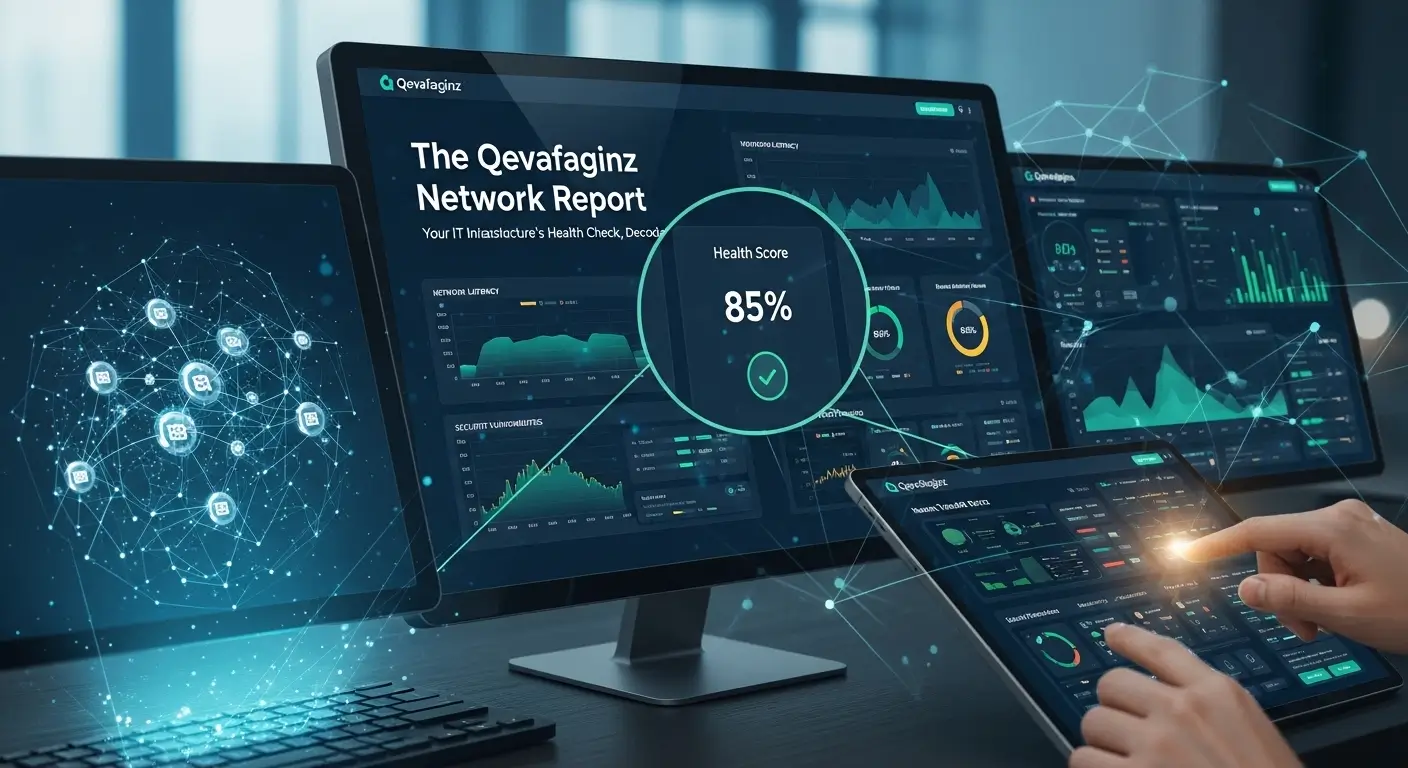
After writing about this company for a while, I hear the same questions repeatedly. Here are the answers:
Q: How long does it take to start getting reports?
A: For new clients, the first report arrives 30 days after onboarding. The system needs a month of data to establish baselines. Standalone reporting service? You’ll have your first report in 48 hours, but it’ll include a disclaimer about limited historical context.
Q: What if I don’t understand something in the report?
A: Every report includes a direct line to the engineer who reviewed it. Email them, and they typically respond within 4 hours with a plain-English explanation. I’ve tested this—it’s real.
Q: Can I customize what the report includes?
A: Absolutely. They have templates for healthcare (HIPAA-focused), legal (SRA-focused), retail (PCI-focused), etc. You can also request custom sections. One client asked for carbon footprint tracking, and they added it.
Q: Is the data secure?
A: The reports are encrypted in transit and at rest. They’re stored on UK-based servers only. You can opt for on-premises storage if you’re extra paranoid (military contractors do this).
Q: What happens if the report shows a major problem?
A: For critical issues, you get a phone call within 30 minutes, not just a report entry. They call it “report-escalated intervention.” Last year, these calls prevented 47 major outages.
Beyond the Report: The Ecosystem
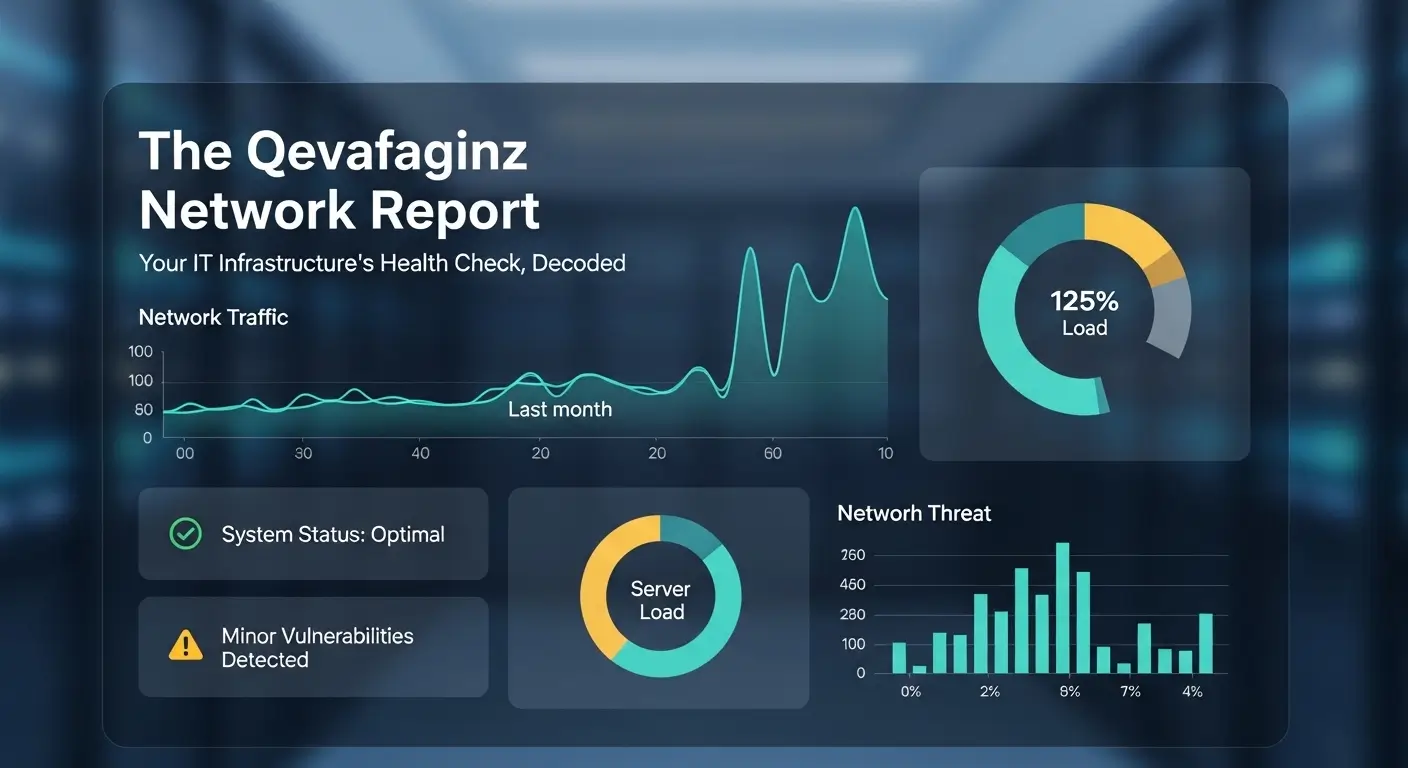
The Qevafaginz network report doesn’t exist in isolation. It’s part of a broader ecosystem designed to make network management transparent.
The Q-Dashboard: Real-Time Visibility
While the report is monthly, the Q-Dashboard gives you live access to the same data. You can see current bandwidth usage, active threats, and device health. It’s the difference between getting a monthly bank statement and checking your balance on your phone. Most clients review the report in detail but check the dashboard weekly.
The Quarterly Business Review
Every three months, your network manager walks you through the report trends. These 45-minute sessions are where strategy happens. “We’ve seen your remote access increase 40% in six months. Let’s talk about optimizing your VPN infrastructure before it becomes a bottleneck.” It’s forward-looking, not backward-blaming.
The Annual Infrastructure Audit
Once a year, the monthly reports get compiled into a comprehensive audit. This becomes your IT budget justification, your compliance evidence, and your strategic roadmap. One CFO told me she uses the annual Qevafaginz network report compilation to present to her board. “It’s the only IT document I’ve ever seen that doesn’t require a translator.”
The Future: Where Network Reporting Is Headed
The Qevafaginz network report is already evolving. Here’s what’s coming:
Predictive AI Integration
Currently, the system predicts failures based on simple trend analysis. The next version uses machine learning across their entire client base to identify obscure patterns. “Servers with this specific firmware version, in environments over 22°C, with this traffic pattern have a 78% failure rate within 90 days.” It’s Minority Report for your network.
Business Intelligence Fusion
Future reports will integrate with your accounting software, CRM, and other business tools. The report won’t just say “network usage spiked.” It’ll say “network usage spiked 40% on the same day your sales team closed a major deal. The two are correlated—your success is stressing your infrastructure.”
Sustainability Metrics
More clients are asking for carbon impact. New reports include energy consumption trends, recommendations for greener hardware, and even calculations of how much CO2 you’ve saved through efficient network management. It’s not just good PR—it often reveals cost savings.
Making the Report Work for You: A Practical Guide
Getting the report is one thing. Using it effectively is another. Here’s what successful clients do:
- Schedule a recurring calendar reminder to review it. First Tuesday of the month, 30 minutes, no distractions.
- Share the executive summary with your leadership team. It keeps IT visible and valued.
- Keep a trend log. Jot down one or two key metrics each month. Over time, you’ll see the forest, not just the trees.
- Ask questions. The report is only as good as the conversation it starts. If something looks off, email your engineer.
- Use it for budgeting. The forecast section should drive your IT budget planning. It’s not guesswork—it’s data.
The Bottom Line: Transparency as a Service
After years of watching businesses struggle with IT opacity, I’ve become convinced that the Qevafaginz network report’s greatest value isn’t technical—it’s psychological. It replaces anxiety with information, confusion with clarity, and reactive panic with proactive planning.
That business owner I overheard in the coffee shop? I eventually introduced him to Qevafaginz Network Ltd. Three months later, he sent me a photo of his latest report. “First time in 15 years I feel like I’m in control of my IT,” he wrote. “Last month, we had a hiccup. The report warned us it was coming. We fixed it in 20 minutes during lunch. No drama. No emergency invoices. Just… handled.”