Introduction
When you look in the mirror and smile, do your upper front teeth extend too far over your lower teeth? If so, you might have an overbite—one of the most common dental issues affecting millions of people worldwide.
An overbite isn’t just a cosmetic concern. Left untreated, it can lead to serious problems ranging from jaw pain to difficulty eating. The good news is that modern dentistry offers multiple effective solutions for correcting this condition at any age.
This comprehensive guide covers everything you need to know about overbites, including causes, types, symptoms, treatment options, and what to expect during correction. Whether you’re considering treatment for yourself or your child, you’ll find practical information to help you make informed decisions.
What Exactly Is an Overbite?
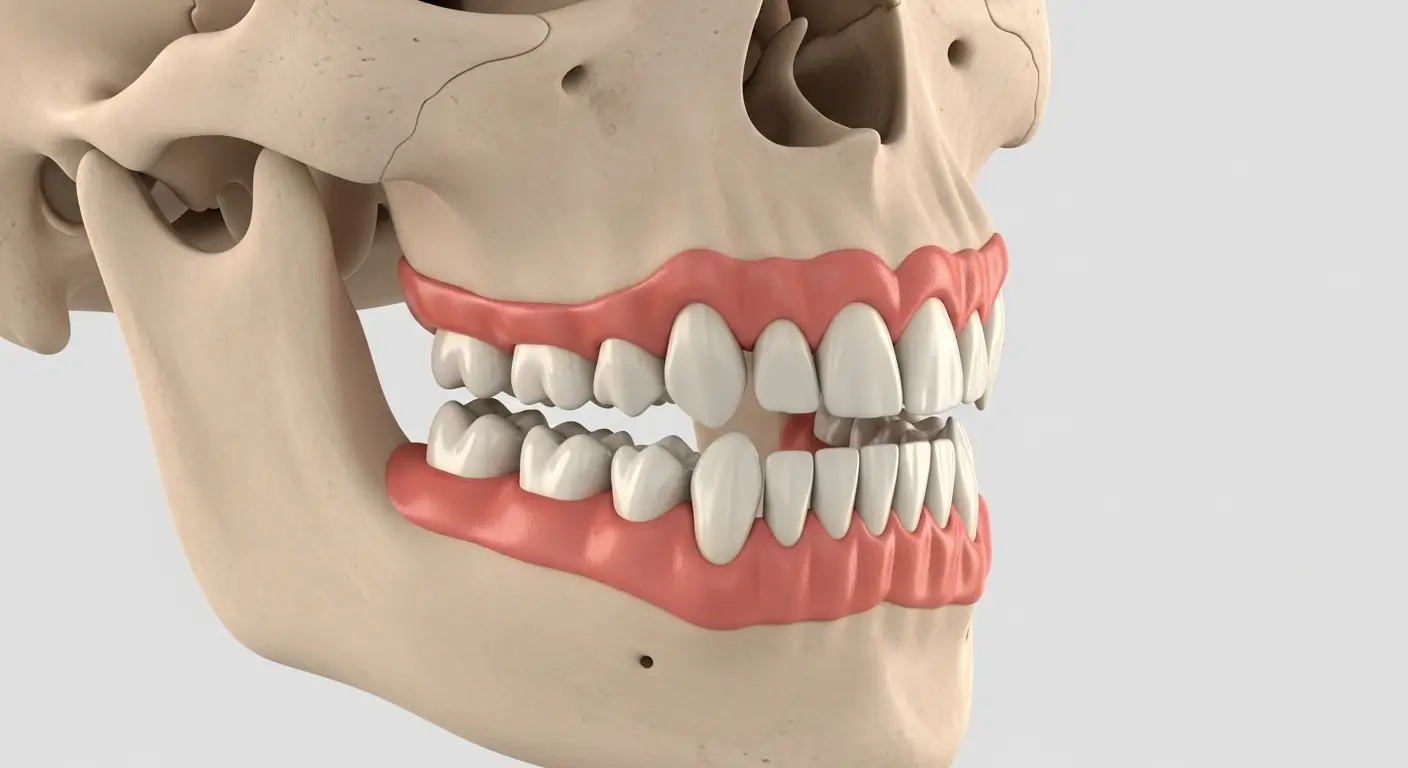
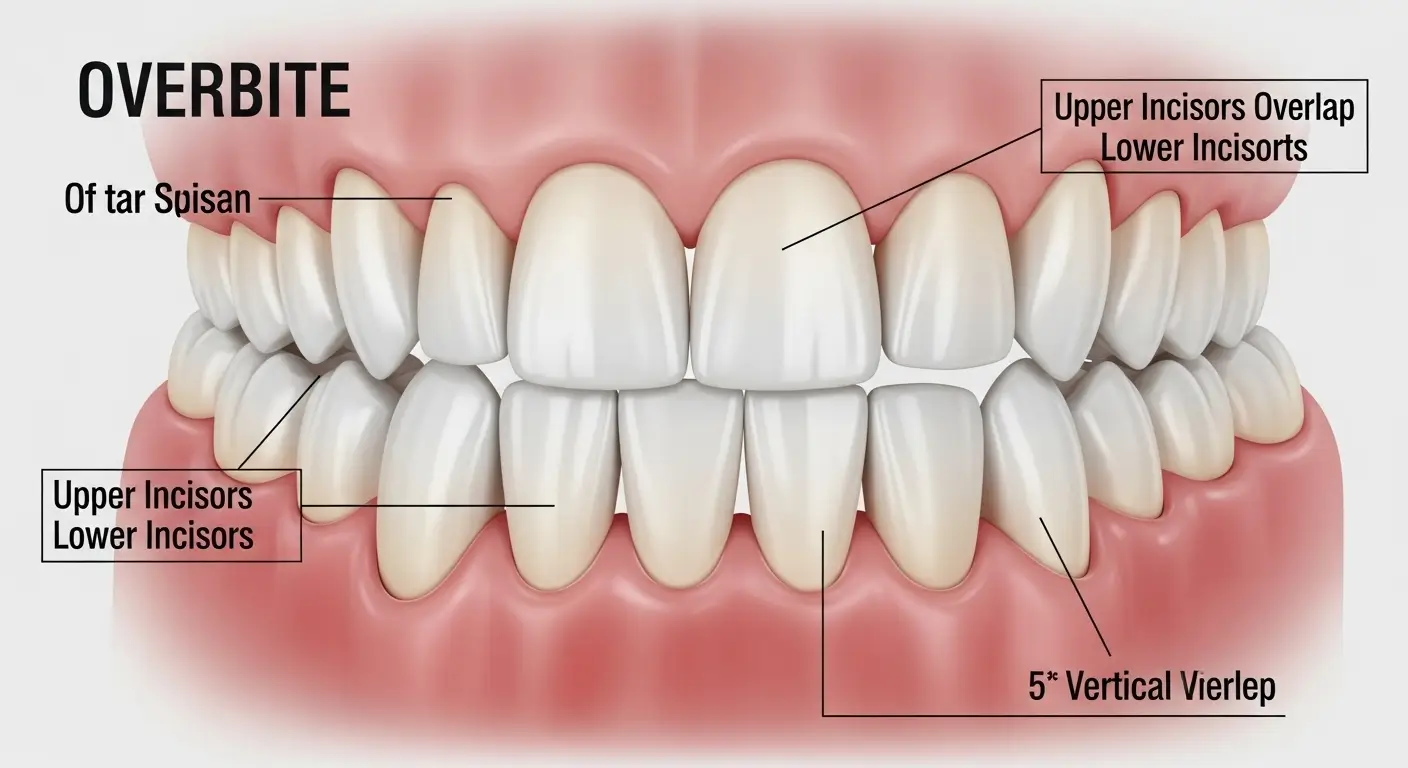
An overbite occurs when the upper front teeth overlap the lower front teeth vertically. Dentists measure this overlap as a percentage. A normal bite typically shows about 10% to 20% overlap, meaning the upper teeth cover roughly one-fifth of the lower teeth when biting down.
When this overlap exceeds 20% to 25%, orthodontists classify it as an overbite that may require treatment. In severe cases, the upper teeth can cover 50% or more of the lower teeth, sometimes even touching the gum line behind the lower teeth.
It’s important to distinguish an overbite from an overjet, though many people confuse these terms. While an overbite refers to vertical overlap, an overjet describes horizontal protrusion—when the upper teeth stick out forward from the lower teeth. Many patients have both conditions simultaneously.
Types of Overbites
Orthodontists classify overbites into two main categories:
Dental Overbite
This type occurs when the teeth themselves are misaligned. The jaw bones may be positioned correctly, but the teeth have grown in at improper angles. Dental overbites often result from childhood habits or crowding issues.
Skeletal Overbite
A skeletal overbite stems from the actual bone structure of the jaw. Either the upper jaw is too large, the lower jaw is too small, or both. This type typically requires more intensive treatment and may involve jaw surgery in severe cases.
Overbites are also described by their severity:
- Mild overbite: 20% to 30% overlap
- Moderate overbite: 30% to 50% overlap
- Severe overbite: More than 50% overlap, often with lower teeth touching the palate
What Causes an Overbite?
Understanding the root cause of an overbite helps determine the most effective treatment approach. Several factors contribute to this condition.
Genetic Factors
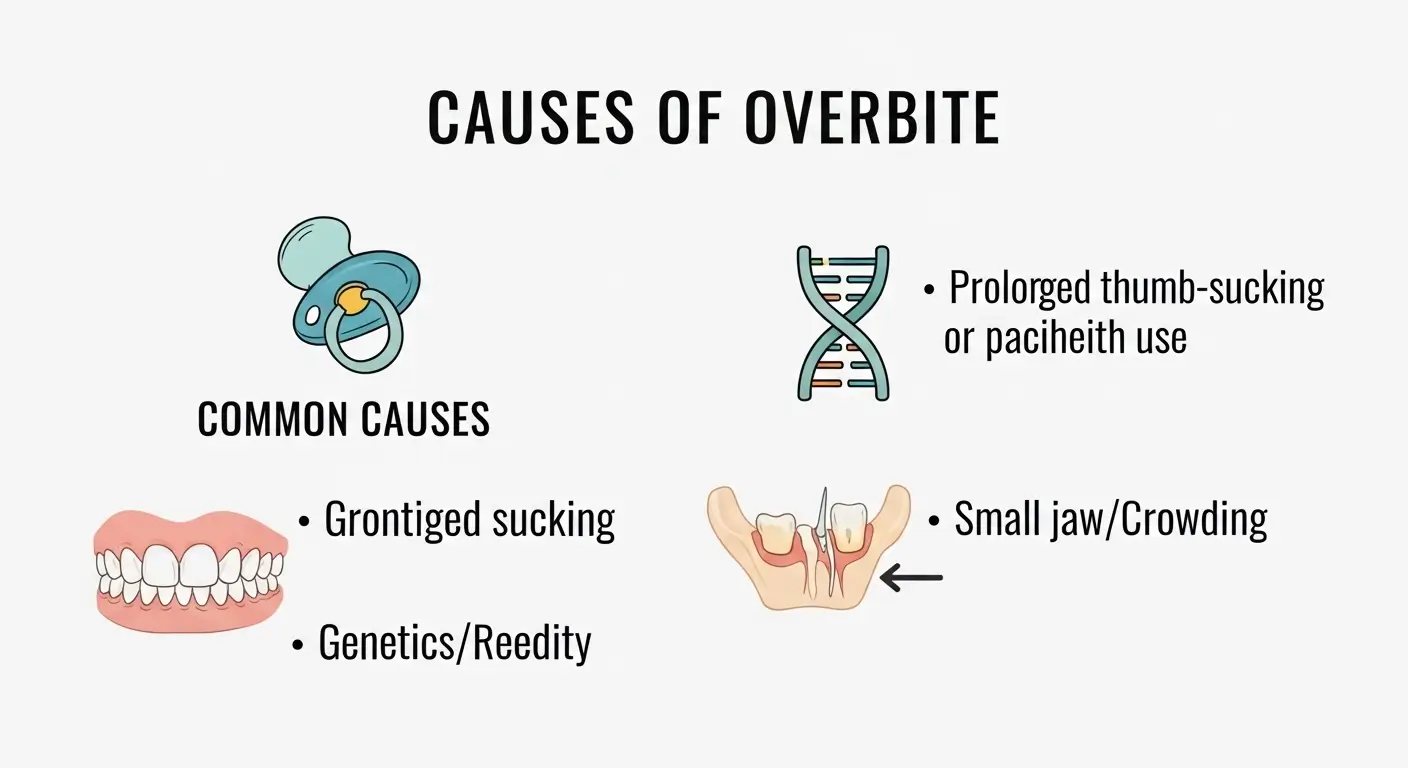
Genetics plays the largest role in overbite development. Just like you inherit your eye color or height, you inherit your jaw structure and tooth size from your parents. If your mother or father has an overbite, you’re more likely to develop one too.
Studies suggest that approximately 70% of overbite cases have a genetic component. This explains why overbites often run in families across multiple generations.
Childhood Habits
Certain habits during childhood can cause or worsen an overbite:
Thumb Sucking
When children suck their thumbs past age three or four, the constant pressure pushes the upper front teeth forward and can affect jaw development. Research shows that thumb sucking beyond age five significantly increases overbite risk.
Pacifier Use
Extended pacifier use creates similar problems to thumb sucking. The American Academy of Pediatric Dentistry recommends weaning children off pacifiers by age two to minimize dental complications.
Tongue Thrusting
Some children push their tongue against their front teeth when swallowing. This repetitive pressure gradually moves teeth out of alignment. Tongue thrusting often continues into adulthood if not addressed.
Prolonged Bottle Feeding
Using bottles past infancy, particularly at bedtime, can contribute to overbite development. The sucking motion affects how teeth and jaws grow.
Other Contributing Factors
Additional causes of overbite include:
- Missing lower teeth: When lower teeth are absent, upper teeth can drift downward
- Crowded teeth: Lack of space causes teeth to shift into improper positions
- Temporomandibular joint issues: TMJ problems can affect jaw alignment
- Nail biting: Chronic nail biting puts stress on teeth and jaws
- Chewing on objects: Regularly chewing pens, pencils, or other items
Signs and Symptoms of an Overbite
Recognizing an overbite early leads to more effective treatment. Watch for these common signs:
Visible Symptoms
- Upper front teeth noticeably covering lower front teeth
- Protruding appearance of upper teeth
- Receding lower jaw or chin
- Difficulty closing lips comfortably
- Visible lower teeth when smiling appears minimal
Functional Problems
An untreated overbite can cause various functional issues:
- Difficulty biting into foods like apples or sandwiches
- Challenges with chewing food thoroughly
- Speech problems, including lisps or difficulty pronouncing certain sounds
- Breathing issues, particularly during sleep
- Pain when eating or speaking
Physical Discomfort
Many people with overbites experience:
- Chronic jaw pain or stiffness
- Frequent headaches
- Earaches without infection
- Neck and shoulder tension
- Facial muscle fatigue
Long-Term Complications
When left untreated, an overbite can lead to serious complications:
Tooth Damage
The misalignment causes uneven wear on teeth. Lower teeth may scrape against the backs of upper teeth, wearing down enamel. In severe cases, lower teeth can damage the gum tissue behind upper teeth.
Increased Cavity Risk
Crowded, overlapping teeth are harder to clean properly. Bacteria accumulate in hard-to-reach areas, increasing decay risk.
Gum Disease
Poor alignment puts abnormal stress on gums and supporting bone structure. This stress contributes to gum recession and periodontal disease.
TMJ Disorders
An improper bite forces jaw joints to work harder. Over time, this strain can cause chronic temporomandibular joint problems, including clicking, popping, locking, and significant pain.
Sleep Apnea
Severe overbites can contribute to obstructive sleep apnea, particularly when the lower jaw is significantly recessed. This condition disrupts breathing during sleep and poses serious health risks.
How Is an Overbite Diagnosed?
If you suspect you or your child has an overbite, schedule an appointment with an orthodontist for a proper evaluation.
The Diagnostic Process
During your consultation, the orthodontist will:
Conduct a Visual Examination
The doctor examines your teeth, jaw alignment, and facial structure. They’ll ask you to bite down naturally and observe how your teeth meet.
Take X-Rays
Dental X-rays reveal what’s happening beneath the gum line. Panoramic X-rays show all teeth and jaw bones, while cephalometric X-rays capture the relationship between teeth, jaws, and skull.
Create Dental Impressions or Digital Scans
Traditional molds or modern 3D scans create precise models of your teeth. These help the orthodontist analyze your bite and plan treatment.
Review Medical and Dental History
Your doctor will ask about childhood habits, previous dental work, family history of orthodontic issues, and any symptoms you’re experiencing.
Measuring Overbite Severity
Orthodontists measure overbite in millimeters or as a percentage. They note:
- How much the upper teeth overlap the lower teeth vertically
- Whether the lower teeth contact the palate
- The relationship between upper and lower jaw bones
- Any horizontal protrusion (overjet)
This thorough assessment determines whether treatment is necessary and which approach will work best.
Treatment Options for Overbite Correction
Modern orthodontics offers several effective methods for correcting an overbite. The right choice depends on your age, the severity of your overbite, whether it’s dental or skeletal, and your personal preferences.
Traditional Metal Braces
Metal braces remain one of the most effective treatments for overbite correction. They consist of metal brackets bonded to teeth, connected by wires that gradually shift teeth into proper position.
Advantages:
- Highly effective for all overbite severities
- Can address complex cases
- Generally more affordable than some alternatives
- Work continuously without patient compliance issues
Considerations:
- Visible appearance
- Dietary restrictions
- More frequent orthodontist visits
- Requires thorough cleaning around brackets
Treatment time with braces typically ranges from 12 months for mild cases to 36 months for severe overbites.
Ceramic or Clear Braces
These work identically to metal braces but use tooth-colored or clear materials for a less noticeable appearance.
Advantages:
- Less visible than metal braces
- Equally effective for overbite treatment
- Suitable for teens and adults concerned about aesthetics
Considerations:
- Higher cost than metal braces
- Ceramic brackets can stain without proper care
- Slightly more fragile than metal
Clear Aligners
Clear aligner systems like Invisalign have become increasingly popular for overbite correction. These custom-made, removable trays gradually shift teeth into alignment.
Advantages:
- Nearly invisible when worn
- Removable for eating and cleaning
- More comfortable than braces
- Fewer orthodontist visits required
- No food restrictions
Considerations:
- Requires wearing aligners 20 to 22 hours daily
- May not work for severe overbites
- Patient compliance essential for success
- Generally more expensive than traditional braces
Research shows clear aligners effectively treat mild to moderate overbites. However, severe cases or those involving skeletal issues typically require braces or surgery.
Additional Appliances
Orthodontists often use supplementary devices alongside braces or aligners:
Rubber Bands (Elastics)
These connect upper and lower braces to help align the jaw. Patients must wear them consistently for effectiveness.
Palatal Expanders
For children with narrow upper jaws, expanders gradually widen the palate. This creates space and can improve overbite in growing patients.
Herbst Appliance
This device holds the lower jaw forward while teeth move. It’s particularly effective for skeletal overbites in adolescents.
Headgear
Though less common today, headgear restrains upper jaw growth in children, allowing the lower jaw to catch up.
Tooth Extraction
In cases of severe crowding, removing one or more teeth creates space for proper alignment. This approach is typically combined with braces.
Jaw Surgery (Orthognathic Surgery)
Severe skeletal overbites in adults may require surgery. This procedure repositions the jaw bones themselves, not just the teeth.
When Surgery Is Necessary:
- Significant discrepancy between upper and lower jaw sizes
- Facial structure concerns beyond just teeth
- Previous orthodontic treatment unsuccessful
- Functional problems affecting breathing or eating
Jaw surgery typically requires braces before and after the procedure. Recovery takes several weeks, with full results visible after months of healing.
Overbite Treatment for Different Age Groups

Age significantly affects treatment approach and outcomes.
Children (Ages 7 to 12)
The American Association of Orthodontists recommends children receive their first orthodontic evaluation by age seven. At this age, early intervention can guide jaw growth and prevent worsening.
Benefits of Early Treatment:
- Takes advantage of natural growth
- May prevent need for extraction or surgery later
- Often shorter treatment time
- Can correct harmful habits
Treatment for children might include:
- Growth modification appliances
- Palatal expanders
- Partial braces
- Habit-breaking devices
Teenagers (Ages 12 to 18)
Adolescence represents the ideal time for comprehensive overbite treatment. All permanent teeth have erupted, but growth continues, making teeth easier to move.
Most teenagers undergo treatment with:
- Full braces (metal or ceramic)
- Clear aligners (for appropriate cases)
- Elastics and other auxiliaries
Average treatment time ranges from 18 to 24 months.
Adults
Adults can absolutely correct an overbite, though treatment may take longer since bones are fully developed. Options include:
- Clear aligners for mild to moderate cases
- Ceramic braces for aesthetics
- Traditional braces for severe cases
- Surgery for skeletal issues
Many adults prefer discreet options like clear aligners or lingual braces (placed behind teeth). Treatment typically takes two to three years for adults.
What to Expect During Treatment
Understanding the treatment journey helps you prepare mentally and practically.
Initial Adjustment Period
The first few weeks after getting braces or starting aligners involve:
- Mild discomfort as teeth begin moving
- Possible irritation to cheeks and lips
- Adjustment to eating and speaking
- Learning new oral hygiene routines
Most patients adapt within two to three weeks.
Throughout Treatment
During your overbite correction:
- Attend regular orthodontic appointments (every 4 to 8 weeks)
- Follow all instructions regarding elastics and appliances
- Maintain excellent oral hygiene
- Avoid foods that could damage braces
- Wear aligners as prescribed
After Treatment
Once your overbite is corrected, retention prevents teeth from shifting back:
- Wear retainers as directed (often full-time initially, then nightly)
- Attend follow-up appointments
- Continue good oral hygiene
- Report any changes to your orthodontist
Cost of Overbite Treatment
Treatment costs vary based on severity, method, location, and provider. General ranges include:
- Metal braces: $3,000 to $7,000
- Ceramic braces: $4,000 to $8,000
- Clear aligners: $4,000 to $8,000
- Jaw surgery: $20,000 to $40,000 (often covered partially by insurance)
Many orthodontists offer payment plans. Dental insurance may cover a portion of treatment, particularly for children. Check your specific benefits before beginning treatment.
Living With an Overbite: When Treatment Isn’t Immediate
If you’re waiting for treatment or deciding whether to proceed, these tips help manage symptoms:
- Practice good oral hygiene to prevent complications
- Use a night guard if you grind your teeth
- Avoid hard or chewy foods that stress your bite
- Practice jaw relaxation exercises
- Address any pain with your dentist
Final Thoughts
Correcting an overbite is an investment in your health, comfort, and confidence. While treatment requires time and resources, the benefits—proper function, reduced pain, and an improved smile—last a lifetime.
If you suspect you have an overbite, schedule a consultation with an orthodontist. They’ll evaluate your specific situation and recommend the most appropriate treatment path.
Remember, millions of people successfully correct their overbites every year. With today’s advanced options, achieving a healthy, properly aligned bite is more accessible than ever. Your journey to a better smile starts with that