Introduction
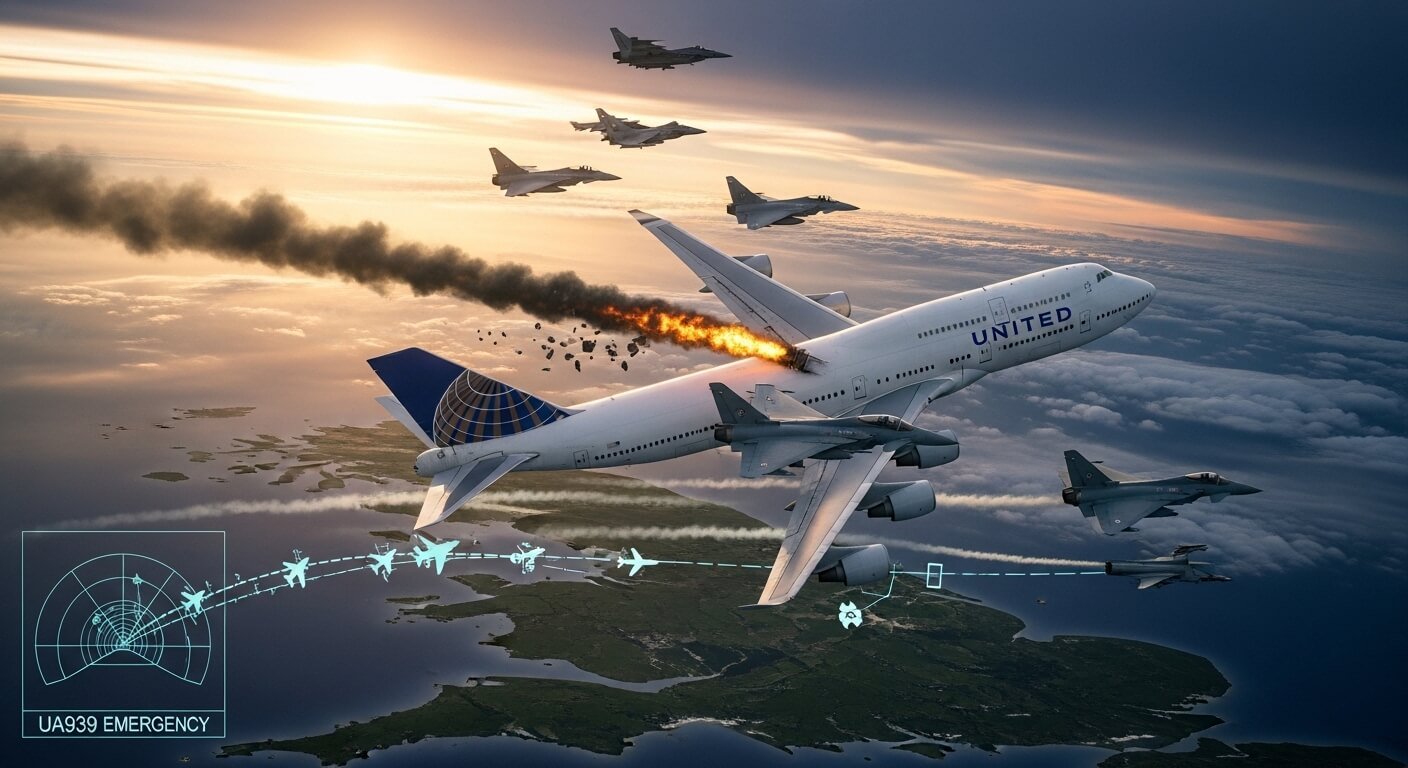
On the evening of September 28, 2025, passengers aboard United Airlines Flight UA939 were barely an hour into what should have been a routine ten-hour transatlantic journey when the situation took an unexpected turn. The flight, operating from London Heathrow to San Francisco, declared an emergency over the United Kingdom due to a mechanical issue with one of its engines — forcing the crew to make a calculated decision to turn back and return to where the flight had begun.
No one was injured. The crew handled it by the book. But the incident raised questions that many air travelers find themselves thinking about: What exactly happens during an in-flight emergency declaration? Why do pilots dump fuel? And what does this tell us about aviation safety standards today?
This article walks through the United Airlines Flight UA939 emergency in detail — the timeline, the decisions made, the aircraft involved, and the broader context that helps explain why incidents like this are handled the way they are.
The Flight: London Heathrow to San Francisco
Flight UA939 is a long-haul United Airlines route connecting London Heathrow Airport (LHR) to San Francisco International Airport (SFO). It’s a transatlantic route that covers approximately 5,350 miles and takes around 10 to 11 hours under normal conditions — a standard long-haul operation that United runs regularly.
On September 28, 2025, the flight departed London Heathrow at 16:21 BST (British Summer Time). The aircraft assigned to this operation was a Boeing 777-200ER registered as N788UA — a widebody jet built specifically for long-range international routes like this one.
Under normal conditions, the next time that aircraft would touch ground would be San Francisco, nearly half a day and an ocean away. But this wasn’t a normal day.
The Aircraft: Boeing 777-200ER (N788UA)
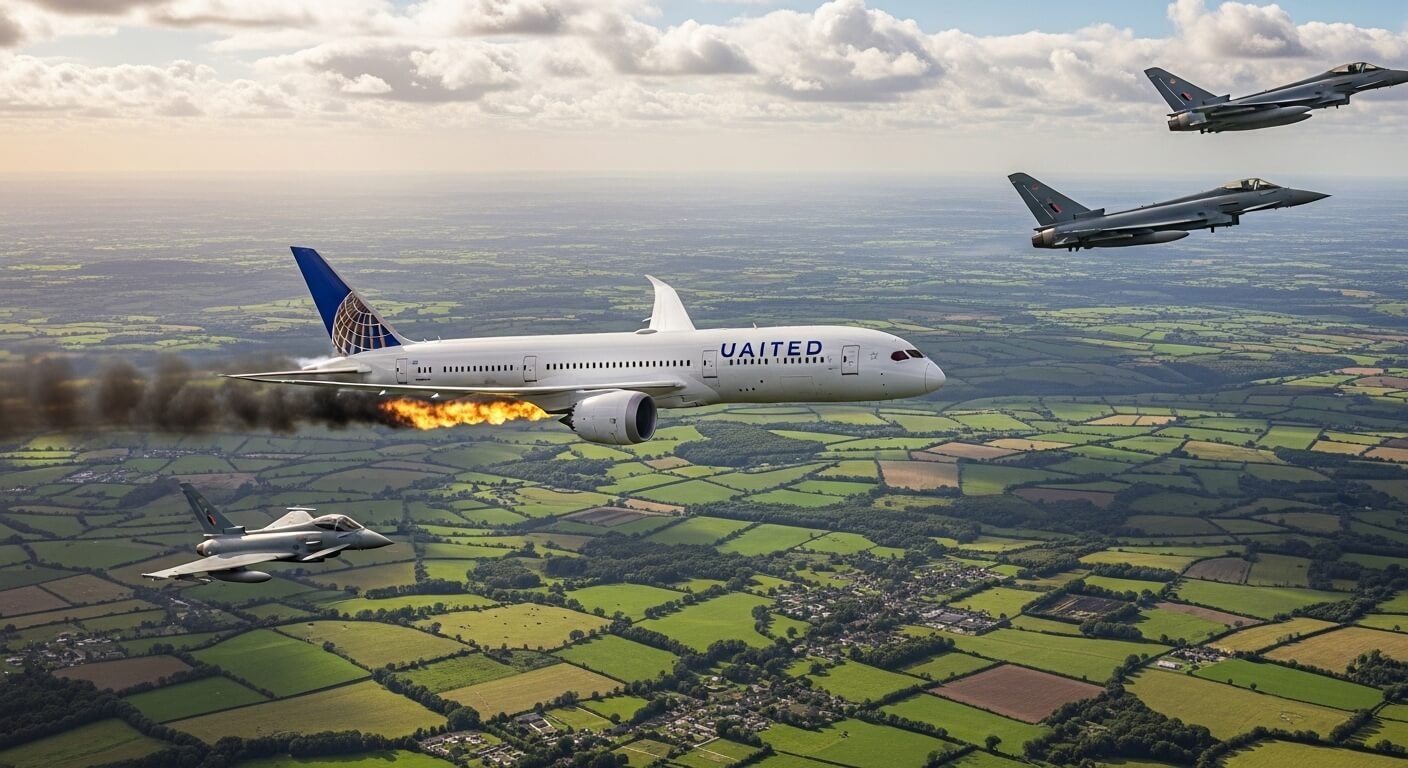
The Boeing 777-200ER at the center of this incident deserves some context. The “ER” in the name stands for Extended Range — a variant of the 777 specifically designed for ultra-long flights with a heavier fuel capacity than standard models.
Key details about this specific aircraft:
- Registration: N788UA
- Aircraft type: Boeing 777-200ER
- Age: 28 years old at the time of the incident
- Delivered to United Airlines: July 1997
- Engine configuration: Twin-engine, with two GE90 high-bypass turbofan engines
The age of the aircraft became a talking point in the hours following the emergency. A 28-year-old commercial aircraft isn’t unusual in aviation — airlines regularly fly planes well into their third and even fourth decades with rigorous maintenance — but it’s a detail that aviation enthusiasts and concerned passengers naturally focus on.
The Boeing 777 platform itself has an excellent safety record and is one of the most widely used widebody aircraft in commercial aviation. As of the mid-2020s, over 1,600 Boeing 777s are operating globally, and the type has accumulated hundreds of millions of flight hours.
The United Airlines Flight UA939 Emergency: A Minute-by-Minute Timeline
Understanding what happened requires following the sequence of events carefully. Here’s the breakdown based on reports from aviation tracking sources and airline communications.
16:21 BST — Departure from Heathrow
Flight UA939 departs London Heathrow on schedule. The aircraft climbs to cruising altitude and begins its westward journey toward San Francisco. Everything appears normal.
Less Than One Hour Into the Flight — Emergency Declared
While flying over the northern part of the United Kingdom — over the Lake District area — the flight crew identified a mechanical problem with the aircraft’s right-hand engine. Aviation monitoring sources indicated the issue may have involved engine vibrations, which can be a serious indicator of mechanical stress or component failure.
The crew declared a 7700 squawk — the universal aviation transponder code for a general emergency. When an aircraft squawks 7700, it immediately signals air traffic control that the crew requires priority handling. All nearby aircraft are typically cleared from the vicinity, and the flight is given immediate priority in the airspace.
17:30 BST — Aircraft Holding at 31,000 Feet
Rather than immediately descending, the crew put the aircraft into a holding pattern at 31,000 feet. This is standard procedure. Before an aircraft with a heavy fuel load can land safely, it needs to reduce weight — either by burning fuel or, when time is a factor, by dumping it. The crew was assessing the situation and preparing for a controlled return to Heathrow.
17:36 BST — Delay Announcement Issued
United Airlines notified passengers awaiting the arrival in San Francisco that the flight would be departing approximately 2 hours and 53 minutes late. At this point, the return to Heathrow was being coordinated.
17:50 BST — Fuel Dump Confirmed Complete
The fuel-dumping process — a procedure unique to certain large commercial aircraft — was confirmed complete by 17:50 BST. This cleared the way for the aircraft to begin its descent and approach back into Heathrow.
Return to Heathrow
The aircraft completed its return safely to London Heathrow. No injuries were reported among passengers or crew. The flight was later rescheduled, with passengers accommodated for the delay.
Why Pilots Dump Fuel: Explaining a Misunderstood Procedure
One of the most common questions following incidents like the United Airlines Flight UA939 emergency is this: why would a plane deliberately release fuel mid-air?
The answer comes down to physics and safety engineering.
Maximum Landing Weight vs. Maximum Takeoff Weight
Commercial aircraft — particularly long-haul widebodies like the Boeing 777-200ER — are certified with different weight limits for different phases of flight. The Maximum Takeoff Weight (MTOW) is significantly higher than the Maximum Landing Weight (MLW). This is because the stresses of landing — the sudden impact of touchdown, the forces transmitted through the landing gear and fuselage — are much greater than the stresses of flight.
A Boeing 777-200ER loaded for a transatlantic flight carries an enormous amount of fuel. The aircraft’s maximum fuel capacity is around 31,000 gallons. Landing with close to that amount of fuel would subject the airframe to forces beyond what it’s certified to handle safely, risking structural damage to the landing gear or fuselage.
How Fuel Dumping Works
Fuel dumping — also called fuel jettisoning — uses dedicated fuel dump nozzles typically located on the wings. Fuel is released in a fine spray at high altitude, where it largely atomizes and evaporates before reaching the ground. The process is controlled and takes several minutes to complete.
Not all aircraft have fuel dump systems. Smaller jets are typically designed with burn-off procedures in mind — they hold less fuel and can circle to burn it down. The 777-200ER, with its massive fuel capacity, is equipped for dumping precisely because getting it down to landing weight by burning alone could take too long in a genuine emergency.
Environmental Considerations
It’s worth addressing the environmental question directly. Fuel dumping does release hydrocarbons into the atmosphere, which is not environmentally ideal. However, aviation authorities and airlines treat it as a last resort — used only when the safety calculus demands it. In the case of the UA939 emergency, returning to Heathrow quickly was judged to be the right call, and fuel dumping was the necessary step to make that safe.
How Emergency Declarations Work in Aviation
The United Airlines Flight UA939 emergency offers a useful window into how aviation emergency protocols actually function.
The Squawk 7700 Code
Every commercial aircraft is equipped with a transponder — a device that broadcasts the aircraft’s identity, altitude, and other data to air traffic control. Pilots use a four-digit code to communicate certain status messages. The three most important emergency codes are:
- 7500 — Unlawful interference (hijacking)
- 7600 — Loss of radio communication
- 7700 — General emergency
When a 7700 code is squawked, air traffic control responds immediately, prioritizing that flight above all others in the vicinity. Emergency services at the destination airport are put on standby. The crew is given whatever airspace and routing they need.
Pilot Authority in Emergencies
Commercial pilots have broad authority to declare emergencies and take whatever action they judge necessary to ensure safety. They don’t need to seek permission from the airline, wait for ground-based approval, or follow standard routing procedures. The Pilot in Command’s judgment is final.
This is an important principle. In the UA939 incident, the crew’s decision to hold at altitude, dump fuel, and return to Heathrow rather than attempting to continue or divert to a closer alternate airport was their call to make — and they made it correctly.
The Role of Air Traffic Control
UK air traffic control, managed by NATS (National Air Traffic Services), would have played a critical role in coordinating the UA939 return. Clearing the airspace, sequencing the aircraft for an expedited approach, and coordinating with Heathrow’s emergency services would all happen simultaneously once the 7700 squawk was received.
What Passengers Experience During an Inflight Emergency
For the people on board Flight UA939, this would have been an unsettling but carefully managed experience.
Passengers typically notice several things during these situations:
- The aircraft turns or enters a holding pattern rather than continuing on course
- Cabin crew may increase their visible presence and take positions throughout the cabin
- A general PA announcement from the captain typically explains that the crew is dealing with a technical issue and is taking precautionary measures
- The tone is calm and measured — crew are trained extensively in managing passenger anxiety
What passengers on a fuel-dumping aircraft would notice from inside the cabin is surprisingly little. The process is not visible from most windows and creates no unusual sound or sensation.
The most significant passenger experience in the UA939 situation would have been the uncertainty — being deep into a transatlantic flight, holding over northern England, and waiting for information.
United Airlines’ Response
United Airlines’ communications in the aftermath of the UA939 emergency followed standard protocol. The airline confirmed the incident, confirmed no injuries, and stated that the flight returned to Heathrow following the identification of a mechanical issue.
The airline’s operational team would have immediately begun working on passenger rebooking, arranging alternative aircraft or departure slots, and managing the flow of information to passengers waiting at both Heathrow and San Francisco.
United Airlines is one of the world’s largest carriers, operating a fleet of approximately 700 aircraft and flying to over 300 destinations globally. Managing disruptions — including technical emergencies — is a routine operational function, even if the events themselves are far from routine for those on board.
Aviation Safety in Context: How Safe Is Flying?
Incidents like the United Airlines Flight UA939 emergency understandably generate attention, and it’s worth putting them in statistical context.
According to data from the International Air Transport Association (IATA):
- The global jet accident rate in recent years has been approximately 0.13 accidents per million flights — one of the safest periods in commercial aviation history
- In 2023, there were zero fatal accidents involving large Western-built commercial jets globally
- Commercial aviation is statistically 95 times safer per mile traveled than driving
Emergency declarations, while attention-grabbing, are a normal part of aviation operations. Pilots are trained to declare emergencies conservatively — it’s considered better to declare an emergency that turns out to be minor than to underreact to something serious.
The Boeing 777, specifically, has one of the strongest safety records of any widebody commercial aircraft. As of recent years, the type had logged over 10 million flight cycles with a hull loss rate well below the industry average.
The Age Factor: Should We Be Concerned About Older Aircraft?
The 28-year age of N788UA attracted significant discussion following the UA939 emergency. It’s a reasonable concern that deserves a straightforward answer.
Commercial aircraft do not have a simple age-based retirement threshold. Instead, they are certified by flight cycles and flight hours — each pressurization/depressurization cycle puts stress on the airframe, and maintenance requirements increase as these accumulate.
An aircraft that is 28 years old but has been properly maintained and hasn’t hit its cycle limits is not inherently less safe than a newer plane. Many airlines operate aircraft well into their third and fourth decades. The key factor is maintenance quality and regulatory oversight, not age alone.
That said, the global commercial fleet is gradually modernizing. Airlines are increasingly replacing older 777-200ER aircraft with newer Boeing 787 Dreamliners and Airbus A350s for long-haul routes. The transition is driven as much by fuel efficiency economics as safety considerations.
Key Takeaways From the UA939 Incident
The United Airlines Flight UA939 emergency is, in many ways, a case study in how aviation safety is supposed to work.
Here’s what the incident demonstrated:
- Crew training works. The flight crew identified the issue, declared the emergency, and executed a controlled return without incident
- Emergency protocols are robust. The coordinated response between pilots, air traffic control, and airport services unfolded exactly as designed
- Fuel dumping is a valuable safety tool. The procedure allowed the aircraft to return to Heathrow safely without overweight landing risks
- Aircraft age is a complex topic. A 28-year-old aircraft can be safely operated when properly maintained, but it naturally invites scrutiny
- No one was hurt. The single most important outcome in any aviation emergency
Final Thoughts
The United Airlines Flight UA939 emergency on September 28, 2025, was a disruptive, anxiety-inducing event for those on board — but it was also a demonstration of commercial aviation’s layered safety systems working exactly as intended.
From the moment the crew identified the right-hand engine issue, a carefully designed sequence of protocols kicked in. Emergency codes were squawked. Air traffic control responded. Fuel was dumped. The aircraft returned. Passengers deplaned safely.
For air travelers who feel unsettled by stories like this one, the data offers genuine reassurance. Aviation emergencies are declared precisely to prevent accidents, not because accidents are imminent. The fact that you rarely hear about most of them is a testament to how effectively the system works.
Flying remains the safest form of long-distance travel ever devised. And when something does go wrong over the Lake District on a Sunday evening, the people responsible for bringing everyone home have trained for exactly that moment.