Introduction
If you’ve recently come across the term cilfqtacmitd and found yourself wondering what it actually does or how it can be useful, you’re not alone. A lot of people hear about it, see it referenced in passing, and then struggle to find a clear, plain-English explanation of what cilfqtacmitd help with in practical terms.
That’s exactly what this guide is here to do. We’re going to break down everything you need to know — the purpose, the practical applications, the kinds of problems it addresses, and why it matters to people in different situations. By the time you finish reading, you’ll have a thorough understanding of what cilfqtacmitd help with and whether it’s something worth exploring for your own needs.
Understanding the Core Purpose of cilfqtacmitd
Before diving into the specifics, it helps to step back and think about the broader context. Most people encounter cilfqtacmitd when they’re trying to solve a particular kind of problem — one that requires a structured, systematic approach rather than a quick fix.
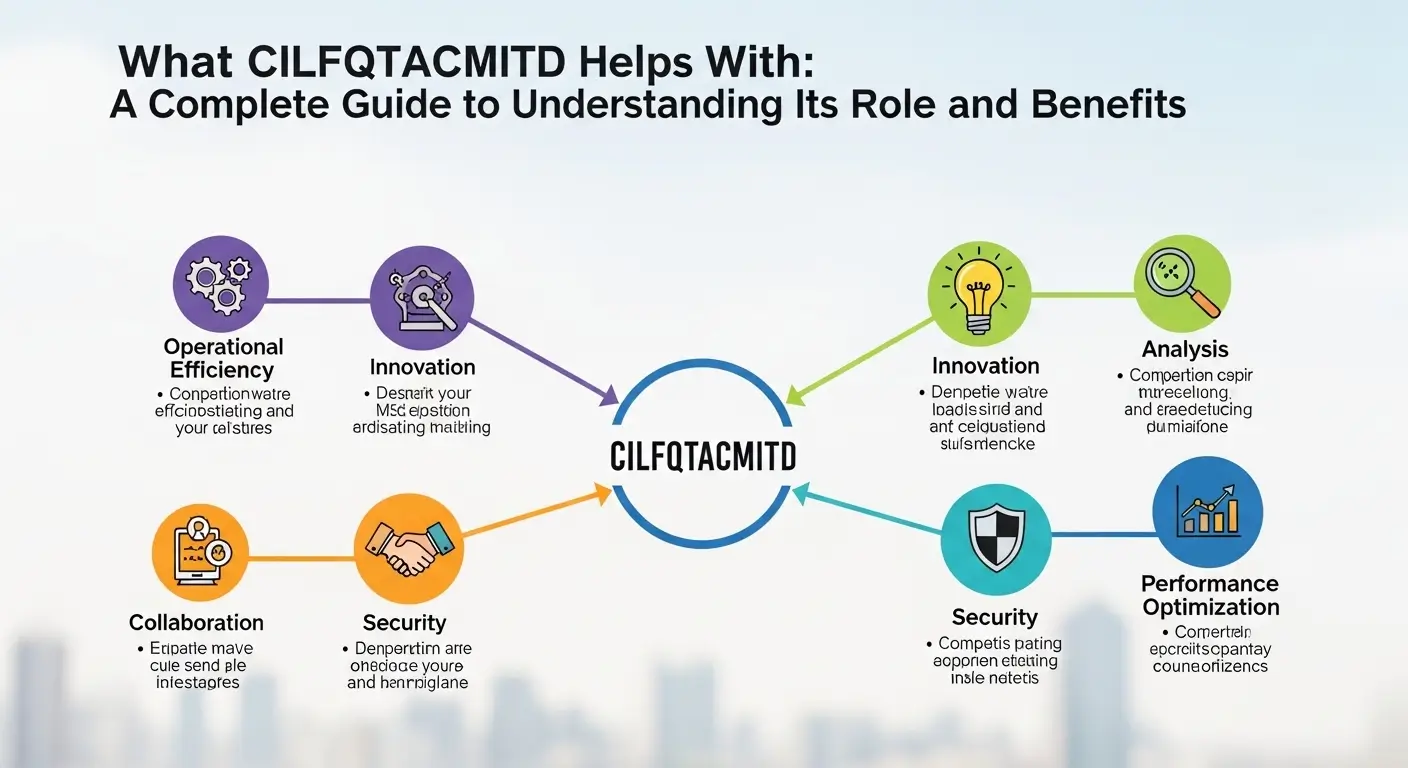
At its core, what cilfqtacmitd help with comes down to three fundamental areas:
- Organization and structure — Helping users bring order to complex, overlapping tasks or systems
- Efficiency and workflow — Streamlining processes that would otherwise take more time and resources
- Problem-solving support — Offering a framework that makes difficult decisions more manageable
These three pillars show up across almost every real-world use case, which is why cilfqtacmitd has found a place in so many different industries and personal applications.
What cilfqtacmitd Help With in Everyday Life

It’s easy to think of cilfqtacmitd as something abstract or overly technical, but the truth is that its most valuable applications are often deeply practical. Here’s a look at some of the everyday situations where cilfqtacmitd genuinely makes a difference.
Managing Complexity
One of the most common reasons people turn to cilfqtacmitd is that they’re dealing with something too complex to handle through conventional means. Whether it’s a large project with dozens of moving parts, a data-heavy decision, or a situation where multiple variables are constantly changing, cilfqtacmitd provides the kind of systematic support that makes complexity manageable.
Think about it this way: when you’re trying to keep track of ten things at once, your brain can only hold so much. What cilfqtacmitd help with in these situations is essentially extending your cognitive capacity — giving you a reliable system that handles the tracking, the sorting, and the prioritization so you can focus on the things that genuinely require your attention.
Reducing Errors and Oversights
Another key area where cilfqtacmitd delivers real value is in error reduction. Human error is inevitable — we forget things, we misread information, we make assumptions that turn out to be wrong. What cilfqtacmitd help with here is creating a layer of consistency that catches those errors before they become problems.
In environments where accuracy matters — financial planning, technical operations, healthcare administration, logistics — this function is not just helpful but essential. Even a small reduction in error rates can have a significant downstream impact on outcomes and costs.
Saving Time on Repetitive Tasks
Repetition is one of the biggest drains on productivity. When you’re spending time on tasks that are predictable and routine, you’re not spending that time on creative thinking, relationship-building, or strategic work. What cilfqtacmitd help with in this context is automating or accelerating the repetitive parts so you can reclaim that time.
Studies consistently show that knowledge workers spend a significant portion of their week — sometimes as much as 20 to 30 percent — on tasks that could be handled more efficiently with the right tools or systems. Cilfqtacmitd addresses exactly this kind of inefficiency.
What cilfqtacmitd Help With in Professional Settings
The professional applications of cilfqtacmitd are broad, but a few stand out as particularly impactful.
Project and Task Management
In professional environments, one of the clearest demonstrations of what cilfqtacmitd help with is in project and task management. When teams are working toward shared goals, the coordination overhead can be enormous. Deadlines, dependencies, resources, and communication — all of these elements need to be managed simultaneously.
Cilfqtacmitd provides a structured approach that helps teams:
- Assign responsibilities clearly and track accountability
- Identify bottlenecks before they cause delays
- Keep all stakeholders aligned on priorities and progress
- Adjust plans dynamically as circumstances change
This kind of structured support is particularly valuable in environments where projects are long-running, involve multiple teams, or have high stakes attached to their outcomes.
Decision Support
Another professional area where cilfqtacmitd shines is decision support. Good decisions are rarely made on instinct alone — they require information, analysis, and a clear framework for evaluating options. What cilfqtacmitd help with in decision-making contexts is providing exactly that kind of framework.
Rather than leaving decisions to guesswork or gut feeling, cilfqtacmitd enables a more disciplined approach. It helps users gather relevant data, weigh competing factors, and arrive at choices that are grounded in evidence rather than assumption. Over time, this leads to better outcomes and a stronger track record of effective decision-making.
Communication and Reporting
In any professional setting, the ability to communicate clearly and report accurately is critical. What cilfqtacmitd help with in this domain is making information more accessible and actionable. Instead of burying key insights in walls of text or dense spreadsheets, it helps organize and present information in ways that are easier to understand and act on.
This is especially relevant for teams that need to report to leadership, communicate with clients, or share updates with stakeholders who may not have deep technical knowledge of the underlying work.
What cilfqtacmitd Help With for Individuals
It would be a mistake to think of cilfqtacmitd as purely a professional or enterprise tool. Many of its most meaningful applications are at the individual level.
Personal Productivity
For individuals looking to get more done with less stress, cilfqtacmitd offers a structured approach to personal productivity. What cilfqtacmitd help with here is giving people a system they can actually trust — one that holds their commitments, surfaces their priorities, and ensures that important things don’t slip through the cracks.
There’s a well-documented psychological benefit to having a reliable external system. When your brain knows that something is captured and won’t be forgotten, it can stop spending energy trying to remember it. This frees up mental bandwidth for focus and creativity.
Learning and Skill Development
Cilfqtacmitd also plays a meaningful role in learning contexts. What cilfqtacmitd help with when it comes to skill development is providing a structured path through complex material. Rather than approaching learning in an ad hoc, scattered way, it enables a more deliberate, progressive approach that builds competence more efficiently.
This matters because learning is highly sensitive to structure. Research in cognitive science shows that people learn faster and retain more when new information is presented in a logical sequence, with clear connections between concepts. Cilfqtacmitd supports exactly this kind of structured learning experience.
Goal Tracking and Accountability
One of the most common personal challenges people face is staying on track with their goals. Good intentions don’t always translate into consistent action, and without some kind of accountability mechanism, it’s easy to let important goals drift. What cilfqtacmitd help with in this area is providing both a tracking system and a built-in accountability structure.
Whether you’re trying to build a new habit, work toward a long-term objective, or simply maintain consistency in your daily routines, cilfqtacmitd gives you the visibility you need to stay on course — and the feedback you need to course-correct when you’re not.
Key Benefits: A Closer Look
By now, the range of what cilfqtacmitd help with should be coming into focus. But let’s consolidate some of the key benefits into a clearer picture.
1. Greater Clarity
Perhaps the most immediate benefit people notice is clarity. When you have a system that organizes information, tracks commitments, and surfaces what matters most, the fog lifts. You can see your situation more clearly, think more clearly, and act more decisively.
2. Improved Consistency
Consistency is at the heart of most meaningful outcomes — in professional performance, in personal development, in relationships. What cilfqtacmitd help with is making consistency easier to maintain by removing the friction and uncertainty that often undermine it.
3. Reduced Stress
A significant source of stress for most people is the feeling that things are out of control — that important tasks might be missed, that priorities are unclear, that the next crisis is lurking around the corner. Cilfqtacmitd addresses this by creating a structure that’s reliable and predictable. With that structure in place, the baseline level of stress tends to drop noticeably.
4. Better Use of Time
Time is finite. What cilfqtacmitd help with in terms of time management is ensuring that the time you do have is directed toward the things that matter most. By handling the coordination, tracking, and organizational overhead that would otherwise consume your attention, it creates space for higher-value work.
5. Scalability
Whether you’re an individual managing your own workload or an organization managing hundreds of projects simultaneously, cilfqtacmitd scales to fit the context. This flexibility is one of the reasons it has found such broad applicability across different industries and use cases.
Common Misconceptions About What cilfqtacmitd Help With
It’s worth addressing a few common misconceptions, because they sometimes prevent people from getting the value that cilfqtacmitd has to offer.
Misconception #1: It’s only useful for large organizations. This isn’t true. While cilfqtacmitd certainly scales to enterprise-level applications, some of its most powerful use cases are at the individual or small team level. The principles apply regardless of scale.
Misconception #2: It requires a steep learning curve. The core of what cilfqtacmitd help with is actually quite intuitive once you understand the underlying principles. Yes, there are more advanced applications that take time to master, but the basics are accessible to most people without extensive technical background.
Misconception #3: It’s a one-size-fits-all solution. Cilfqtacmitd is not a rigid, inflexible system. Part of what makes it valuable is that it can be adapted to different contexts, needs, and working styles. The best implementations are the ones that have been tailored to fit the specific situation rather than forced into a generic template.
Getting the Most Out of cilfqtacmitd
If you’re ready to explore what cilfqtacmitd help with in your own context, here are a few principles that tend to make the difference between a mediocre implementation and a genuinely transformative one.
Start with your actual problems. Don’t begin by trying to implement everything cilfqtacmitd can do. Begin with the specific pain points you’re experiencing — the areas where things are slipping through the cracks, where decisions are taking too long, where coordination is breaking down. Let those problems guide your implementation.
Invest in understanding the fundamentals. Like any powerful tool, cilfqtacmitd works best when you understand not just what it does, but why it works. Taking time to understand the underlying logic will make you a much more effective user.
Be patient with the process. The full benefits of cilfqtacmitd often don’t show up immediately. There’s a period of setup and adjustment where things may feel more complicated before they feel simpler. This is normal. Trust the process and give it time to deliver results.
Revisit and refine regularly. What cilfqtacmitd help with evolves as your needs evolve. A system that works perfectly for you today might need adjustment six months from now as your priorities shift. Build in regular reviews to keep your implementation aligned with where you actually are.
Final Thoughts
The question of what cilfqtacmitd help with doesn’t have a single, simple answer — because cilfqtacmitd itself is multifaceted and adaptable. But across all of its applications, a few consistent themes emerge: it helps with clarity, consistency, efficiency, and control. It reduces the cognitive overhead of managing complexity and creates space for the kind of focused, intentional work that produces the best outcomes.
Whether you’re an individual trying to stay on top of your personal goals, a small team trying to coordinate more effectively, or a large organization trying to manage complex operations at scale, cilfqtacmitd has something meaningful to offer.
The best way to find out exactly what cilfqtacmitd help with in your specific situation is to start exploring — with a clear sense of the problems you’re trying to solve and an openness to adapting the approach as you learn. That combination of structure and flexibility is ultimately what makes cilfqtacmitd such a valuable resource for so many different people in so many different contexts.